The Omega-3 and 6 Fatty Acids Story
It would be hard to be an adult in this day and age with any interest in health and not have heard about omega-3 and omega-6 fatty acids. However, do you know what they are and why they are important? Let’s delve into these amazing nutrients and explain what all the fuss is about.
Omega-3 and omega-6 fatty acids are two groups of fats that are critical for our health. These two groups of compounds are subgroups of a type of fat called PUFAs.

The term PUFA sounds like a cute little furry animal from some remote region, but it is actually an acronym for polyunsaturated fatty acid, a class of very important fats.
We are going to do a shallow dive into organic chemistry for a second here…

(don’t worry, it will be brief)
Fatty acids are long chains of carbon and hydrogen atoms with a carboxyl group (COOH – a carbon double bonded to an oxygen on one side and single bonded to an oxygen-hydrogen group on the other). Because the carboxyl group is acidic, the hydrocarbon is an acid, hence the designation fatty acid. The term polyunsaturated means that there are multiple double bonds in the structure of the hydrocarbon. The term omega is the last letter of the Greek alphabet and is used to designate the tail end of the hydrocarbon. The number that goes with the omega (eg. 3 or 6) is where on the hydrocarbon chain the first of the double bonds occurs. An omega 3 fatty acid has its first double bond on the third carbon from the tail end and an omega-6 fatty acid has its first double bond on the sixth carbon from the tail end. This may sound like some mumbo jumbo chemistry, but the double bonds are the reason the fatty acid has certain properties including making cell membranes more fluid and improving cellular function which directly affect why they are so good for us.

The primary omega-3 fatty acid is alpha-linolenic acid (ALA) and the primary omega-6 fatty acid is linoleic acid (LA). Both ALA and LA are considered essential fatty acids (EFAs); essential because humans cannot create them and they must be obtained from our food. ALA and LA can be converted in the body to a series of other longer chain PUFAs that are critical for a multitude of processes and organs in the body. Two superstar omega-3 fatty acids that can be synthesized from ALA are docosahexaenoic (DHA) and eicosapentaenoic acid (EPA), however, this pathway does not produce significant amounts of DHA and EPA. DHA and EPA can be obtained directly from certain foods including fatty fish and certain algae. DHA and EPA are responsible for most of omega-3’s superstar qualities.
All about balance
The standard American Diet (SAD – an appropriate acronym because it is nutritionally sad) has an overabundance of omega-6’s and a scarcity of omega-3’s which has created an imbalance in these fats. Research suggests our ancestors consumed equal amounts of omega-6s and omega-3s creating a ratio 1:1. The present day SAD has a ratio of 15:1 and maybe as high as 20:1! That means we are eating up to 20 times more omega-6 fats than omega-3 fats, which means for every tablespoon of omega-3 fats, we are consuming 1 ¼ cups of omega-6 fats. This imbalance is believed to contribute to many of our present day diseases. Studies show reducing this ratio to 5:1 or less has beneficial effects on chronic diseases including certain cancers, asthma, rheumatoid arthritis, and cardiovascular disease.
All this talk about this lopsided ratio has resulted in a bad reputation for omega-6 EFAs. This may be unwarranted though. Humans require both omega-6 and omega-3 EFAs for optimal health and omega-6s do a lot of good things in our bodies. It’s likely that the real problem is the sources of the omega-6s in our diets and that we do not consume many omega-3s. The SAD diet includes a significant amount of ultra processed food. Ultra processed food typically contains an abundance of highly processed seed oils and many of these are loaded with omega-6 fatty acids and void of omega-3 fatty acids. Simply eliminating ultra processed food from the diet will help to bring these two EFAs into a better balance and provide whole food sources of omega-6 EFAs. Instead of vilifying omega-6s, the focus should be on increasing omega-3s and eliminating unhealthy sources of omega-6s.


Omega-6s
Omega-6 fatty acids are crucial building blocks for cell membranes and play a role in promoting healthy skin health. They are also important for creating and decreasing inflammation in the body. Inflammation is a natural immune response in the body and is important for healing. It only becomes a problem if the inflammation persists for long periods of time as in chronic conditions. Omega-6s are also important for brain energy metabolism, memory, and learning. Omega-6 fatty acids may help in the prevention of heart disease, but more research is needed to confirm this. Omega-6 EFAs are primarily found in plant foods including seed oils. Seed oils have been subject to criticism recently partially because of their contribution to this imbalance between omega-6s and omega-3s. Many seed oils are highly processed and used in ultra processed foods which bring in a host of other issues. It takes a significant effort to extract oil from seeds. Solvents are frequently used in the extraction process and some seeds are modified specifically to create a high oil percentage. It also takes a significant amount of seeds to create a cup of oil, many more seeds than you would normally eat.
Where do we get omega-6s?

A small amount of certain seed oils that have been extracted without chemicals may be a source of omega-6s in a healthy diet. However, It is preferable to get omega-6s from whole food sources such as walnuts, sunflower seeds, pumpkin seeds, pine nuts, and eggs. Eating the whole food, rather than a portion that has been extracted from it, will provide the benefits from the other phytonutrients in the food.
Omega-3s
Omega-3 fatty acids are important for a startling number of processes and organs in the body including the brain, heart, eyes, endocrine system, and digestive system. They are especially important for the brain and eyes where an abundance of omega-3s are found. In fact, the brain is approximately 66% fat and omega-3s make up approximately 20% of this fat. Their role in the brain includes facilitating cognition, neurotransmitter function, memory, learning, cell development, cell elasticity, and reducing inflammation. Omega-3s also decrease the risk of Alzheimer’s disease and dementia, decrease the risk of developing blood clots, and may help prevent brain cancer. In addition, omega-3s are associated with decreased depression and anxiety which are likely due to their effects on the brain including neurotransmitter function, neuroplasticity, and reducing inflammation.
Omega-3s are heroes for the eyes and vision development. The omega-3 DHA makes up part of the photoreceptors in the retina and is critical for vision. Omega-3s exhibit anti-inflammatory, antioxidant, and neuroprotective effects in the eyes. They decrease inflammation, promote retinal integrity, reduce the risk of dry eyes, age-related macular degeneration, glaucoma, and retinopathy.
Their role in promoting heart health is derived from their ability to decrease triglyceride levels, lower blood pressure, and reduce the risk of sudden cardiac arrest. The research shows greater heart health benefits for certain individuals and specifically for African Americans. High triglycerides promote cardiovascular inflammation and atherosclerosis which can lead to heart attacks and strokes. Diets rich in omega-3s protect the heart in part by decreasing triglycerides.
Omega-3s are potent anti-inflammatory agents for the brain, eyes, and heart. Their anti-inflammatory effects are also beneficial for many of the chronic diseases that plague our modern society including Crohn’s disease, rheumatoid arthritis, and psoriasis. In addition, omega-3s may help with nonalcoholic fatty liver disease (NAFLD), a condition in which fat builds up in the liver due to metabolic issues NAFLD is now called metabolic dysfunction-associated steatotic liver disease (MASLD).
Furthermore, omega-3s have been found to exert positive impacts on the digestive system and the gut microbiome. First of all they help establish a healthy balance of gut microbes by increasing the amount of beneficial gut microbes and decreasing the amount of disease related microbes. They also promote the gut microbial production of short-chain fatty acids, beneficial anti-inflammatory compounds. Omega-3s appear to help maintain the intestinal wall integrity and influence the immune system through the gut interaction. Furthermore, omega-3s positively influence the gut-brain axis, that important connection between the gut microbes and the brain.
So how can we get more Omega-3s in our diet?


The best way to get omega-3 is to eat certain cold water fatty fish or to supplement. Omega-3 rich foods include the following:
- Fatty cold water fish,
- Certain algae
- Flax seeds,
- Flaxseed oil,
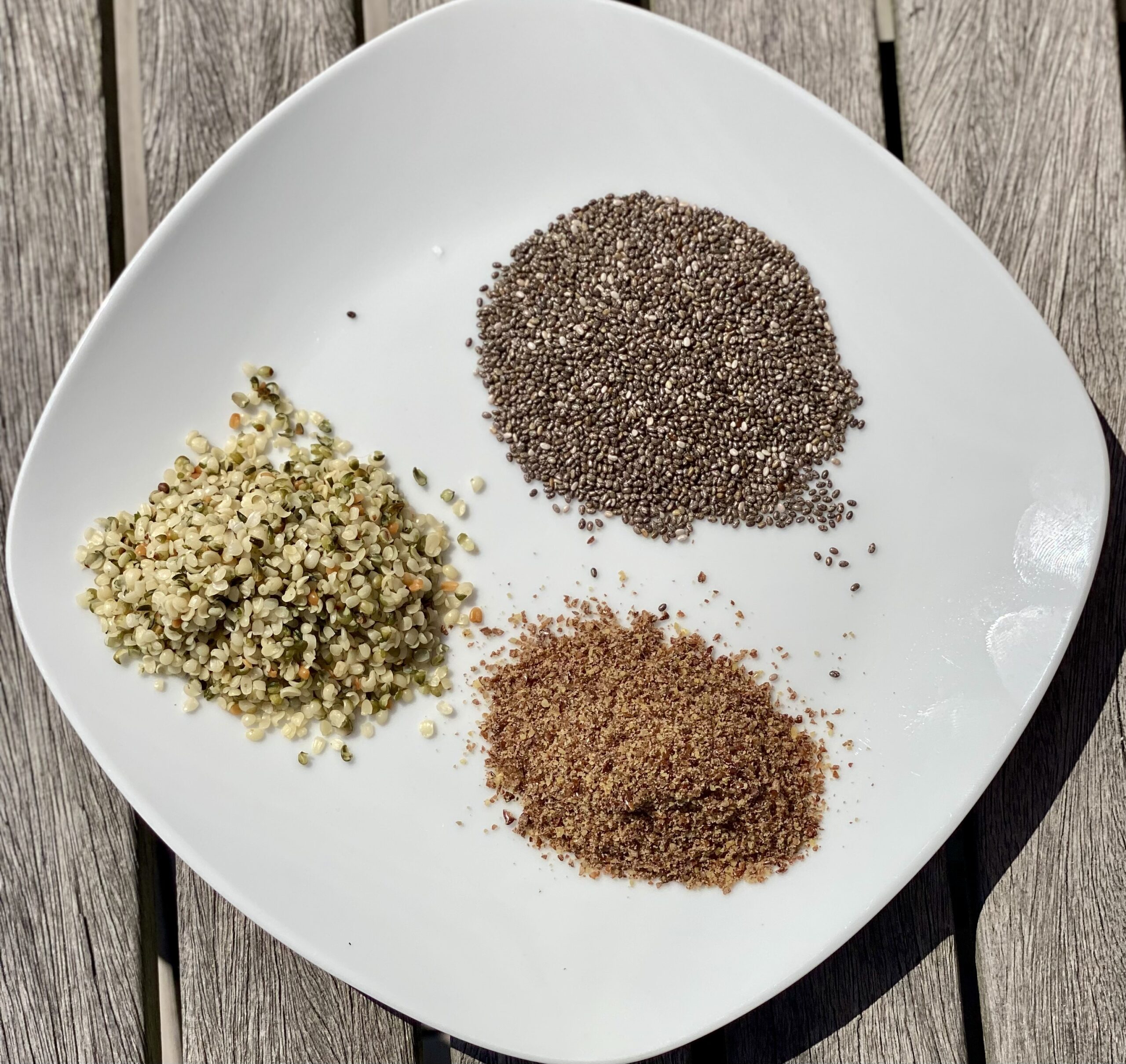
- Chia seeds,
- Hemp seeds, and
- Walnuts
The omega-3s found in fish are DHA and EPA while the plant sources are predominantly ALA. Because ALA must be converted to EPA and DHA in the body and only a small portion is converted, plant sources result in lower blood levels of EPA and DHA than fish sources. An interesting non-fish source of omega-3s are the freshwater algae chlorella and spirulina which contain ALA, EPA, and DHA. The best fish sources of omega-3s are easy to remember with the acronym SMASH: Salmon, Mackerel, Anchovies, Sardines and Herring. Because salmon is a larger fish and may accumulate toxins from the fish it eats, you may want to limit the amount you eat and choose wild caught salmon instead of farmed. Fish oil supplements are widely available and can help to increase the omega-3s in a diet especially if fish consumption is low. However, as always, whole foods are a better choice because they not only provide the omega-3s but also the other nutritive constituents of the food. For vegetarians and vegans, flaxseed oil provides a good dose of ALA, but it is estimated that only about 10% gets converted to DHA and EPA, so it is not a great source of these two fatty acids. Chlorella and spirulina can help, but you may consider supplementing with an algal oil high in DHA and EPA to get optimal levels of these critical nutrients in your diet.
In a nutshell…
Both omega-3 and omega-6 fatty acids are exceptional nutrients and critical for health. Their role extends to nearly every cell in the human body. More and more research is showing how they are instrumental in brain health and can help stave off cognitive decline including dementia and Alzheimer’s. Omega-3s are vital for heart health and can reduce the risk of sudden cardiac arrest. They also play a role in gut health which impacts the brain and a myriad of functions in the body. Americans and many westernized cultures do not get enough omega-3s in their diets and may be getting too much poor quality omega-6s. By eliminating ultra processed food from your diet, you will inherently reduce your intake of processed omega-6s. Incorporate some nuts and seeds into your diet to get high quality omega-6s with the bonus of the accompanying phytonutrients. It is important for nearly everyone to increase consumption of omega-3 fatty acids. If you eat fish, try to incorporate the SMASH fish in your diet or consider a high quality fish oil supplement. If you are vegan or vegetarian, consider supplementing with flaxseed oil, algal oil, chlorella, and spirulina.
2 responses to “Fat to be Fit”
Great dive pic
A shallow dive!