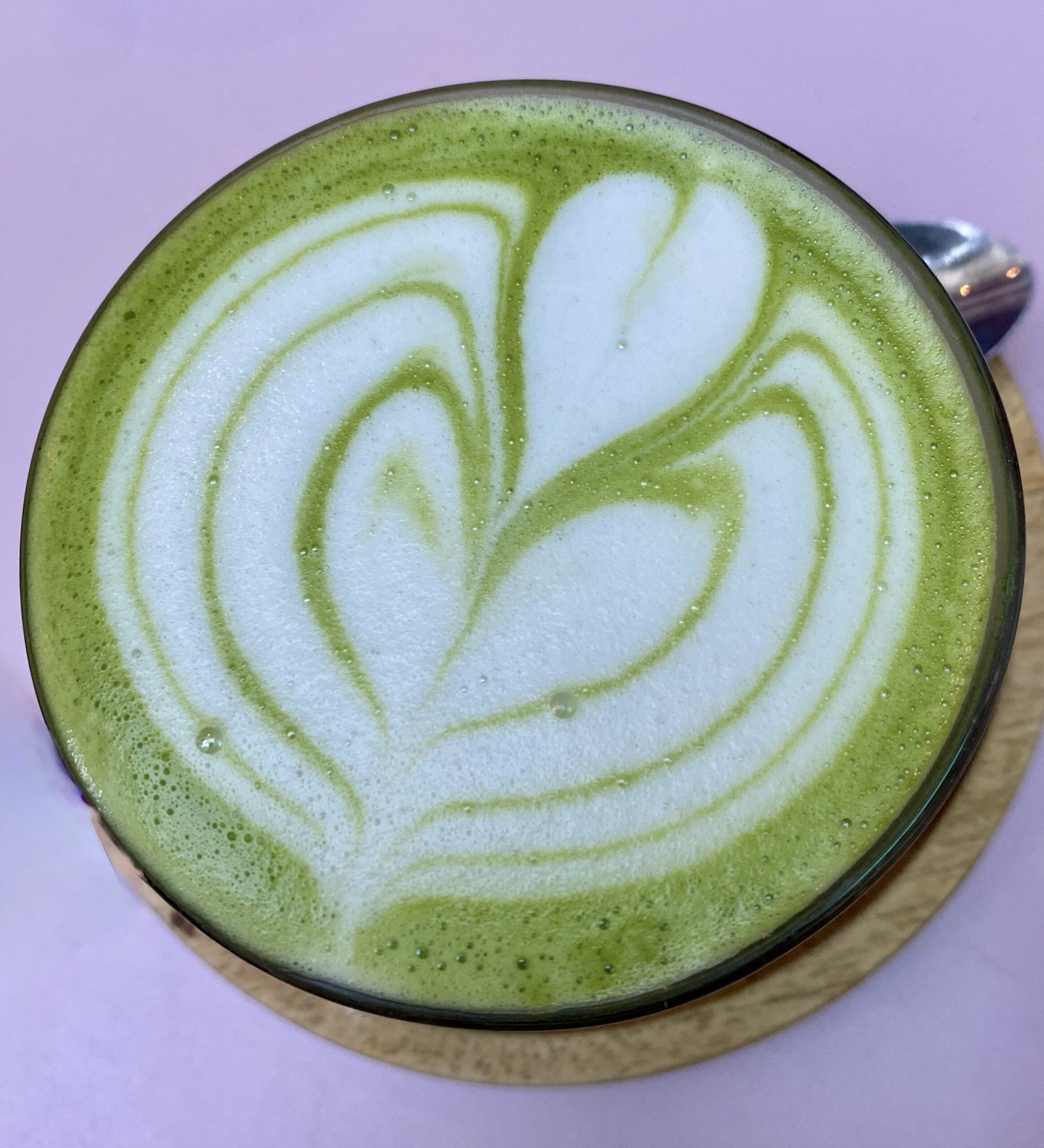

What’s the big deal with matcha?
Matcha is a delicious Japanese green tea that can be consumed hot or cold and has a multitude of health benefits including supporting cardiovascular health, diabetes management, weight loss, focus, and longevity. These health benefits stem from the unique blend of phytochemicals in the tea. Matcha is rich in antioxidants, those free radical scavenging, immune boosting compounds that reduce oxidative stress. It also contains caffeine, L-theonine, chlorophyll, amino acids, and fats, all of which benefit our health.
What exactly is matcha you may ask?
All green tea comes from the Camellia Sinensis plant. But matcha is grown, picked, and processed differently from other green tea.

First of all, the plants used for matcha are grown in the shade which reduces photosynthesis, boosts phytochemical concentrations, and increases chlorophyll production. Only the bud and first three leaves are hand picked for matcha which accounts for its higher cost. Like other green teas, the leaves are then steamed to stop the oxidation process. Most green tea leaves are allowed to curl up while they dry, but matcha leaves are laid flat to dry. The stems and veins are then removed and the dried leaves are ground into fine powder. To make matcha tea, the powder is whisked with water creating a suspension that you consume. This is different from green tea which is made by steeping the leaves in hot water and extracting the leaves before consuming.


Matcha has a deep history with its roots in both ancient China and Japan. In ancient China, before teapots were invented, the tea would be beaten into water to create a warm beverage. A Buddhist monk brought tea plants and the beaten tea process from China to Japan. He created a special way of making the tea that incorporated a meditative process. The Japanese Way of the Tea ceremony was invented; a spiritual practice based on the principles of harmony, respect, purity, and tranquility centered around making and presenting matcha tea
What makes matcha so good for you?
Matcha has been shown to promote cardiovascular health. Regular consumption of green tea reduces risk of stroke and heart disease. Compounds in matcha have positive effects on blood pressure and cholesterol which make it cardioprotective. Matcha consumption may also support focus, diabetes management, longevity, and weight management. Some studies show matcha improves insulin sensitivity and blood glucose levels which are critical for diabetes control and prevention. Its ability to increase metabolism and improve fat burning results in a reduction in body fat especially when combined with a healthy lifestyle. These health benefits are all possible through the actions of the diverse range of phytochemicals in matcha. Some of the major groups of compounds in matcha are discussed below.
Polyphenols
Matcha is packed with polyphenols, a group of chemicals found in plants that act as antioxidants and protect cells from damage and lower the risk of disease. One group of compounds found in matcha are catechins, a group of polyphenols that includes epigallocatechin gallate (EGCG). EGCG is the most abundant antioxidant found in green tea. Catechins are powerful antioxidants that prevent the formation of free radicals, scavenge reactive oxygen species, and prevent the oxidation of lipids which is linked to atherosclerosis. Catechins lower blood pressure and decrease LDL cholesterol which contributes to the cardiovascular benefits of matcha.
Rutin
Rutin, a flavonoid found in matcha, is valued for its therapeutic applications. It is an antioxidant, antidiabetic, cardioprotective, anti-inflammatory, and supports immune function. It contributes to the reduction in blood pressure and LDL cholesterol along with catechins. Rutin aids the vascular system by strengthening blood vessels, improving blood flow, and mitigating some vascular issues. Rutin is especially concentrated in matcha compared with green tea. Matcha contains 50 times more rutin than green tea.
Caffiene and L-Theanine
The combination of caffeine and the amino acid L-theanine in matcha creates a sense of alertness and can improve focus and concentration. The caffeine content in matcha ranges from 38 – 89 mg per 8 ounces which is less than coffee (100 mg) and more than green tea (23-49 mg). Caffeine is a bioactive compound that not only helps with alertness, but also has been shown to be helpful with exercise performance, Alzheimer’s Disease, and Parkinson’s Disease. L-theanine is an amino acid that enhances cognitive function, helps with anxiety and stress and may help you fall asleep and stay asleep. It’s interesting that something that makes you relax can also make you alert and focused, but L-theanine does just that. It interacts with dopamine and seratonin and generates a calm alertness.
Other beneficial compounds
Matcha also contains the health dynamos vitamin C, chlorophyll, and quercetin. Vitamin C is a powerful antioxidant that supports the immune system. (See my post on vitamin C.) Matcha contains twice the amount of vitamin C as green tea. Chlorophyll has a wide range of health benefits from skin health to cancer prevention, while quercetin has antioxidant and anti-inflammatory properties that promote brain and heart health and help with allergies.

All of these wonderful plant based compounds make matcha a great addition to your wellness arsenal. Matcha’s list of potential health benefits include:
- Reduces inflammation
- Protects cell damage
- Protects the heart
- Reduces blood pressure
- Improves concentration, focus, and alertness
- Reduces LDL cholesterol
- Improves insulin sensitivity
- Promotes weight loss
- Protects the body from cancer
- Improves immune function
Even though matcha boasts all these health benefits, it is not a silver bullet. Drinking matcha as part of a healthy diet and lifestyle will reap the most benefits.
So how do you prepare matcha?
Matcha tea is traditionally made by adding a small amount of matcha to a matcha bowl, pouring in hot, not boiling water, and whisking with a bamboo whisk until a smooth green foam forms.


You can also make it in a mug or cup and use an electric frother to mix it. For best results use water at a maximum of 175 ℉ (80 ℃) adding a small amount of water at first to create the foam. Avoid using boiling water because it releases tannins yielding a bitter taste. Once the foam has formed add additional water if desired. Matcha can also be made as a latte by using milk, alternative milk, or a combination of milk and water. You can add a touch of honey if desired. You can also make matcha in a shaker bottle by simply combining the matcha and water and shaking. One of my favorite ways to drink matcha is as a latte with a few healthy additives. Try this spin on a matcha latte recipe for a warm and tasty health drink.

You can also use matcha powder as an additive in smoothies, drinks, and baked goods. I recently had a taste of some excellent matcha chocolate. I love experimenting with matcha powder and will be posting more matcha based recipes in the future.
Just note that the matcha drinks sold at some cafes can be a world apart from traditional matcha tea. They may be loaded with added sugars and possibly artificial ingredients which may counteract the benefits of matcha’s healthy phytochemicals.
In a nutshell…
Matcha is not only a nice addition to your beverage selection, but is a health tonic as well. It can be made into hot tea, cold tea, or as a latte. Although it has less caffeine than coffee and it doesn’t typically cause the jitters, it does contain a fair amount of caffeine so be careful how late in the day you imbibe to prevent disturbing your sleep schedule. When you drink this warm green tea, know that each sip is promoting health benefits for your heart, brain, weight, and more.
Let me know if you are a matcha fan or if you try it out. I would love to hear what you think.