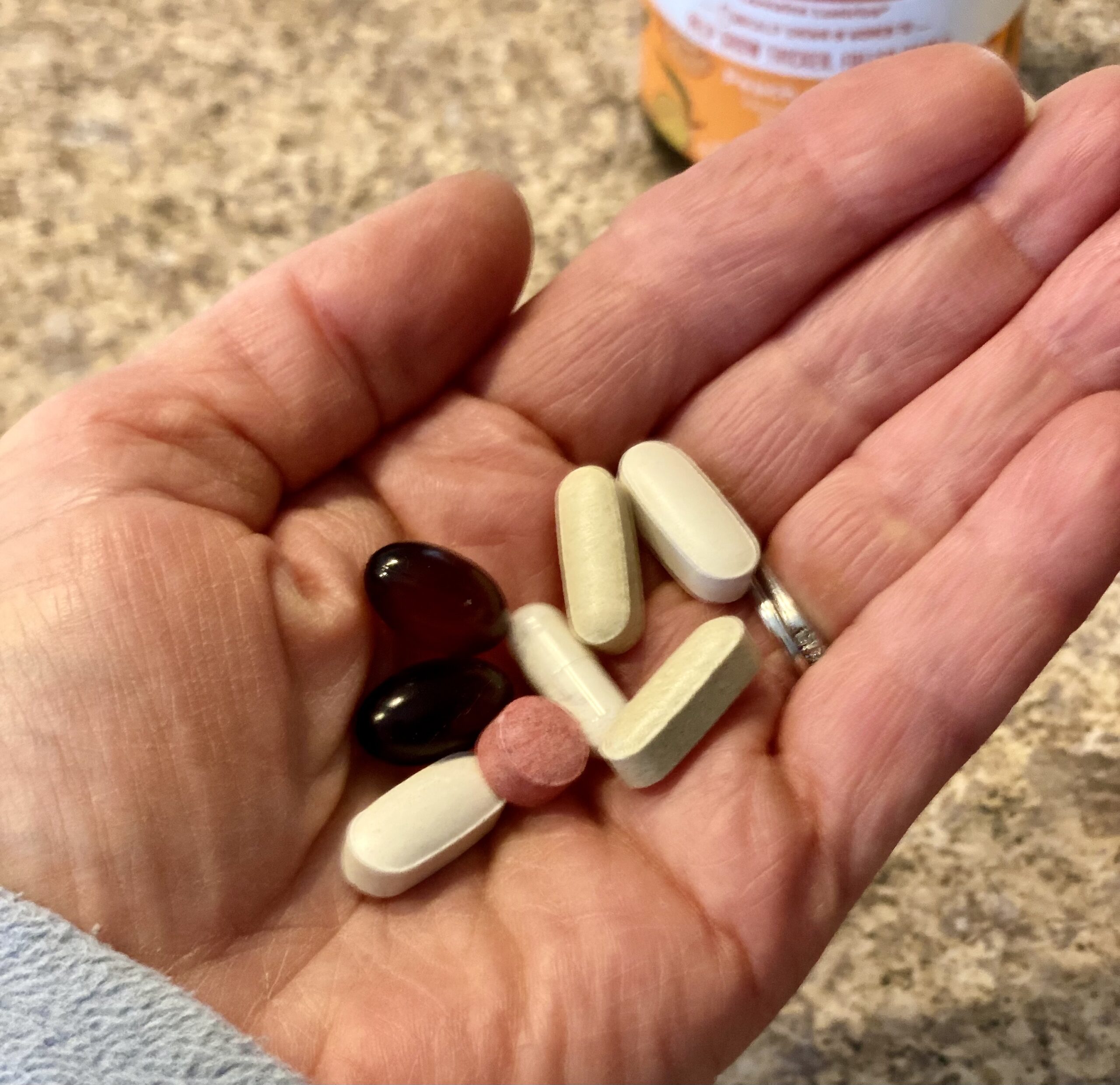

People frequently ask me for advice on supplements. There are so many supplements out there and so many suggestions on social media about products that you absolutely “need” or are the newest in the wonder compounds. While I do believe that the world of plants offers us bioactive phytochemicals that have incredible health benefits, I don’t believe there is a silver bullet. I also don’t want to simply replace pharmaceuticals with supplements adopting the disease based medical model and fall into the “pill for every ill” paradigm. I prefer to use supplements to support the body in healing or restoring balance and to provide what is missing from our diets so our bodies have all the tools they need to function best. Given that, first and foremost, we need to start with prioritizing nutrition, sleep, physical activity or movement, social connection, and getting outside, all of which will help our bodies function best and achieve balance. (Check out my blog about 10 Steps to Take Control of Your Health to find out how each of these impacts your health.)
What Supplements Should I Take?
Getting the nutrition piece right, or as close to right as you can is the first step. Eating a diverse whole foods, plant based diet with little or no ultra processed foods will feed our bodies and our gut microbiomes. Next, we can turn to supplements to bolster our diet and give our bodies a little extra to address particular issues. The supplements I would recommend for most people are:
- a Multivitamin/mineral,
- Vitamin D,
- Vitamin B12,
- Omega-3 fatty acid, and possibly
- Magnesium. and
- Vitamin C.
Multivitamin/mineral

Unfortunately, because of pesticide use, farming practices, and long food distribution times, our food supply is lacking in many vitamins, minerals, and phytochemicals. Mass scale tilling and pesticide use has degraded the soils and destroyed the subsurface mycelium network thereby decreasing the availability of micronutrients that can be taken up by plant roots. This has resulted in modern day plant foods having lower nutrient content than they previously had. Because of this, supplementing with a multivitamin is advisable for most people. Although a basic off the shelf multivitamin may be sufficient to meet the basic needs, I prefer a high quality whole foods supplement from a reputable manufacturer.
Vitamin D

Vitamin D, the sunshine vitamin, is actually considered a multifunctional hormone now, but it still retains the vitamin label. Since the early 1900s, it was known to be essential for strong teeth and bones, however, vitamin D is now known to be important for a wide range of organs and functions in the body including muscles, the heart, thyroid functions, blood clotting, cell growth, glucose metabolism, the immune system, the brain, and mental health. In addition, there appears to be a link between low vitamin D levels and multiple sclerosis, lupus, diabetes, congestive heart failure, scleroderma, colon cancer, osteoarthritis progression, and hypertension. Low vitamin D levels are also associated with a greater risk of infection from upper respiratory infections, bacterial infections, and the flu.
Most people are deficient or insufficient in vitamin D, but certain groups are especially at risk for low levels. These include people who get low sun exposure, elderly people, dark skinned people, people who are obese, and those who have conditions that limit vitamin D absorption. Although the RDA for vitamin D is 600 for people between the ages of 1 and 70, this level was set based on maintaining healthy bones and does not consider all of the other functions of the vitamin. Many holistic and functional medical doctors suggest 1000 – 5000 IUs daily to promote health. You may want to start off with 1000 IUs of vitamin D, monitor how you feel, and get your blood levels checked. Checking vitamin D levels is advisable so you know if the dosage is sufficient and to prevent the rare case of getting too much of this fat soluble vitamin. One note about vitamin D supplements is that they can cause nausea in some people when taken on an empty stomach. Personally, I have to take my D supplements with a meal.
Even if you take a supplement, the best way to get vitamin D is through sun exposure and our amazing bodies self-regulate so you will never get too much vitamin D from this route. Get outside, expose your skin to the sun as much as you can, and reap the vitamin D benefits! Check out my blog post on Vitamin D for more information on this health promoting compound.
Vitamin B12

Vitamin B12 is another vitamin that is critical for good health and one you may consider adding to your arsenal especially if you are older, vegetarian, vegan, or under stress. It is important for cellular functions, the nervous system, the cardiovascular system, producing DNA, preventing certain types of anemia, helping to detoxify pesticides, and maintaining energy levels. In addition, vitamin B12 appears to affect the function and composition of the gut microbiome, a cornerstone of health. Because vitamin B12 is found primarily in animal products, vegetarians, vegans, and certain others may be lacking in this nutrient. In fact, it is estimated that 20% of adults in the US over age 60 are low in vitamin B12.
Vitamin B12 is cobalamin, a name that refers to the presence of the metal cobalt in the compound and it comes in many forms including cyanocobalamin, methylcobalamin, and adenosylcobalamin. Many advise taking cyanocobalamin supplements which the body converts to a usable form called methylcobalamin. However, this conversion might not happen readily, so taking a supplement that is already in the methylcobalamin and adenosylcobalamin forms might result in a better bang for your buck as the body can more easily use these forms of vitamin B12. Vitamin B12 supplements come in tablets, sublingual (under the tongue) liquids, sprays, and injections and the dosage typically ranges from 1000 to 5000 mcg. For more info, check out my blog post on B vitamins.
Omega-3 Fatty Acids

Omega-3 essential fatty acids are polyunsaturated fatty acids that are important for a startling number of processes and organs in the body including the brain, heart, eyes, endocrine system, and digestive system. They are essential for brain function and vision development, decrease the risk of Alzheimer’s disease and dementia, decrease depression and anxiety, improve neuroplasticity, are cardioprotective, reduce inflammation, and are beneficial for the gut microbiome. There are three omega-3 we need, DHA, EPA, and ALA. Although the body can make both DHA and EPA from ALA, directly consuming DHA and EPA is more efficient. The best dietary sources of omega-3’s are algal oil and certain fatty fish. The fatty fish include salmon, mackerel, anchovies, sardines and herring which are easy to remember with the acronym SMASH. Plant sources of omega-3’s include algae (chlorella and spirulina), algal oil, flaxseeds, flaxseed oil, chia seeds, hemp seeds, and walnuts. Because most people routinely do not consume enough omega-3’s in their diets, supplementing is advisable. Fish oil supplements are widely available and can help to increase the omega-3 levels especially if fish consumption is low. Because mercury bioaccumulates in fat tissues of fish, mercury contamination may be an issue for some fish oil. Look for fish oil supplements that ensure they are free of heavy metals. For vegetarians and vegans, flaxseed oil provides a good dose of ALA, but it is estimated that only about 10% gets converted to DHA and EPA, so it is not a great source of these two fatty acids. Vegetarians and vegans may consider supplementing with an algal oil high in DHA and EPA to get optimal levels of these critical fatty acids. Algal oil omega-3 vegan supplements are available in health food stores and through online retailers. Supplementing with powdered chlorella and spirulina is another option. For more information on omega-3’s, check out my blog post on fats.
Magnesium

Some studies estimate that up to 80 % of the US population get insufficient magnesium in their diets. This is a problem because magnesium is used in more than 300 reactions in the body and is important for the heart, brain, digestion, mood regulation, sleep, muscle contraction, and electrolyte balance. It also comes in a wide variety of forms such as citrate, malate, glycinate, L-threonate and each of these stimulates different organs or systems of the body. Magnesium citrate promotes healthy digestion and is the active ingredient in over the counter laxatives. Magnesium malate is beneficial for energy, muscle function, and may even improve exercise tolerance. Magnesium glycinate is readily absorbed by the body and is beneficial for relaxation, sleep, and muscle function. It has been shown to be helpful for restless leg syndrome. Magnesium L-threonate is able to cross the blood brain barrier and is neuroprotective, helps with memory, focus, and sleep, and can soothe anxiety by calming the nervous system. Magnesium is readily available in beans, leafy greens, nuts, seeds, whole grains, bananas, dark chocolate, and more. Include these foods in your life, but for a little extra you may want to supplement. If you do choose to supplement, to get all the benefits of this wonder mineral, look for a product that contains several different magnesium compounds. If you have a specific area of concern look for the form of magnesium that best supports that area. Because it can have calming effects, you may want to take this supplement in the evening. Typical magnesium supplement dosages for adults are 250 – 350 mg per day.
Vitamin C

Vitamin C (ascorbic acid) is an important vitamin for a robust immune system as it is an incredible antioxidant. Because it is water soluble and cannot be produced by the human body, it needs to be consumed daily. Vitamin C is also prone to degradation by heat, light, oxygen exposure, and long storage so eating foods in their whole form and as close to their harvest as possible will provide the highest levels of this nutrient. It is found in high quantities in citrus fruits but it is also found in several other fruits and vegetables. Severe deficiency in vitamin C causes scurvy; but before getting to that point, vitamin C insufficiency affects multiple systems in the body. Ascorbic acid helps fight infections, heal wounds, produce collagen, produce hormones, and oxidize free radicals. Although the RDA for vitamin C is 90 mg for men and 75 mg for women, doses of 250 mg have been shown to be helpful in warding off colds. Some health practitioners believe that we do not get enough of this vitamin and recommend getting much higher doses of vitamin C in bioavailable forms. This is especially important when fighting off an infection because your body uses up antioxidants like vitamin C quickly resulting in an increased need for this nutrient.
Even though it is plentiful, most people do not get enough of this critical nutrient in our foods so supplementation can help our bodies to perform at their highest potential and especially when stressed by a virus or infection. Vitamin C supplements are available in different forms and formulations. Several health proponents suggest doses of vitamin C upwards of 500 mg/day based on the health conditions you are experiencing. One form of vitamin C that is easily absorbed and easy on the digestive system is Ester C with rosehips. Rosehips are the red fruit of the rose bush that form after the flowers fade. They are often added to supplements because they are packed with vitamin C and phytonutrients. Vitamin C is available as tablets, capsules, gummies, and drink mixes. Check out my blog post on vitamin C for more on this powerhouse vitamin.
A note about supplements
One thing to note about supplements is that they are not regulated by the FDA in the same way foods and drugs are. The FDA does not authorize or approve supplements, they rely on the supplement companies themselves to ensure product safety and appropriate labeling. However, the FDA can take supplements off the market for making illegal promotional claims, misbranding, or for being unsafe.

According to the FDA:
a supplement is:
“a product taken by mouth that contains a dietary ingredient intended to supplement the diet.”
while a drugs is:
“articles intended for use in the diagnosis, cure, mitigation, treatment, or prevention of disease” and “articles (other than food) intended to affect the structure or any function of the body of man or other animals.”
These definitions mean that a supplement, herbal remedy, or essential oil cannot claim to treat or cure a disease or condition or it would be considered a drug. This is why you will see wording such as “supports” or “assists with” on supplement labels. Because supplements are not considered drugs, they come with a disclaimer stating that the FDA does not confirm the efficacy of the products and the product is not intended to treat or cure a disease. This disclaimer does not mean that the supplement is not effective and will not help you achieve wellness. It is a reflection of these definitions and the different testing requirements for drugs and supplements.
However, because of the reduced testing requirements, the contents of supplements may vary significantly from what they claim to be. Some studies have shown that certain supplements do not contain the compounds listed on the label or the concentrations of the compounds are highly variable. This is where the integrity of the supplement company is important. With the deluge of supplements available out there and many companies jumping on the supplement bandwagon, quality is not ensured.


Reputable supplement companies employ third party testing to verify content and consistency of their products. Third party testing means that an independent company other than the manufacturer has tested the product as a quality assurance measure. There are several organizations that do third party testing and offer certifications of quality. When shopping for supplements, look for certifications and endorsements by such companies as NSF, Clean Label, Informed Choice, and USP or indications on the label that it has been tested by a third party. You can also look or certifications for vegan, gluten free, and non-GMO.
In a nutshell…
Our diets and the food we have available may leave us wanting in the nutrient department. Of course, try to eat a diverse plant based diet to provide the full range of vitamins and minerals your body needs. Also, incorporate other healthful behaviors into your life such as adequate sleep, physical activity, social engagement, and getting outside which will impact your stress levels, metabolism, and immune function which in turn can impact your nutrition status. Beyond that, as a general rule, most people will benefit from a few supplements in their life including a multivitamin/mineral, vitamin D, vitamin B12, omega-3, and possibly magnesium, and vitamin C.
Please note, that these are general guidelines and may not be appropriate for everyone. The intent of this information is purely education and does not constitute medical advice. Consult with a qualified medical practitioner before making dietary changes and consider blood testing to determine nutrient status.
I hope you find this brief outline of a few health promoting supplements helpful. I’d love to hear back from you. Please comment if you have questions or just to reach out.
2 responses to “Supplement Suggestions for Healthy Humans”
Terrific ariticle.
Very imformative and balalnced.
Thank you!