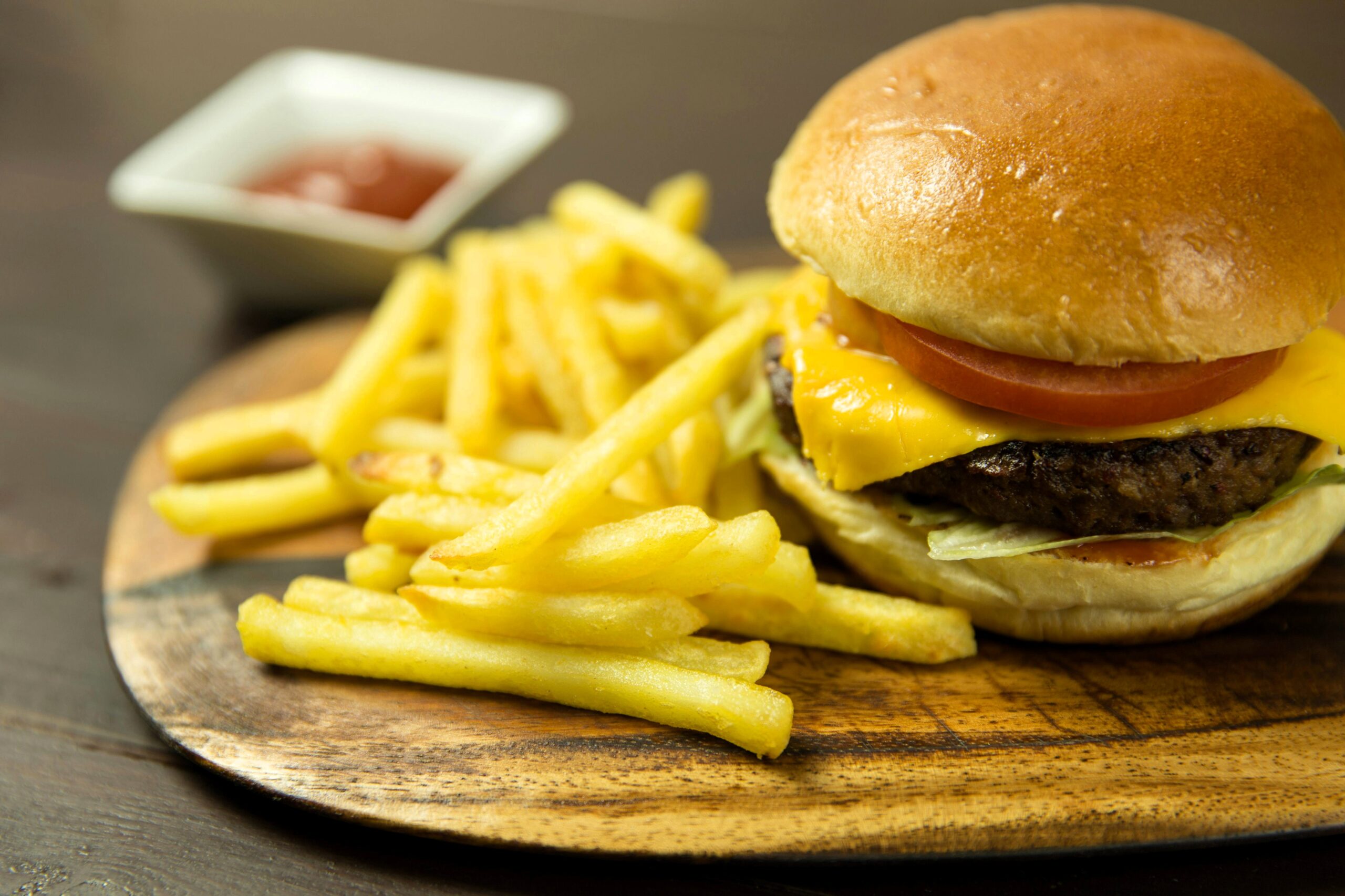
Our grocery stores, convenience stores, fast food outlets, and even restaurants are loaded with a category of “food” known as ultra-processed food (UPF). Although these “foods” may look and taste delicious, they have a little insidious secret – they are addictive, they detract from our health, and are one of the leading causes of the chronic diseases plaguing our world today.
The Oxford Dictionary defines food as:
“any nutritious substance that people or animals eat or drink or that plants absorb in order to maintain life and growth.”
UPFs do not meet this definition. They are not nutritious and actually tax our health instead of supporting life and, therefore, should not be called food. Perhaps “food-like substance” might be a more appropriate term.
So What Exactly Are UPFs?
UPFs are food-like products that have been highly processed and typically include a long list of chemicals on their labels. These products often start with a whole food such as a fruit, vegetable, or grain, but then undergo significant processing in food production plants that results in products that do not bear much nutritional resemblance to the original food. During processing, that nutritious whole food is chopped, mashed, remixed, molded into shapes, cooked at high temperatures, chemically extracted, hydrogenated, preserved, irradiated, bleached, dyed, and chemically treated. Many health detracting compounds are added to the products, including:
- artificial colors,
- artificial flavors,
- preservatives,
- stabilizers,
- emulsifiers,
- artificial sweeteners, and
- added sugars.
All of this results in products that are soft, easy to eat, and are considered “hyperpalatable” – engineered to maximize taste, texture, and reward. To make matters worse, even the whole foods used as the base material have been genetically modified and doused with pesticides.
…and what is the issue with them?
One of the major issues with UPFs is that their hyperpalatability basically hijacks our brains and makes us crave these foods and overconsume them: filling our bellies, but starving our cells. Food companies knowingly add flavor enhancing compounds to make the “food” even more appealing and addictive. There is a certain combination of fat, sugar, and salt called the “bliss point” that was discovered by food scientists to be particularly pleasing to our tastebuds and senses. Food companies target this bliss point in many of their products to make them addictive. Sugars or artificial sweeteners are often unnecessarily added to foods primarily to enhance this addictive nature. In addition, food companies often use artificial or lower quality ingredients that are less expensive than their natural counterparts to make production cheaper and profits greater. Artificial colors are less expensive than natural colors and are a cost effective substitute. Cheaper seed oils are used instead of health promoting olive oil or coconut oil. The emphasis is not on nutrition, it is on profit.
Every single one of the compounds listed above has been shown to negatively affect the gut microbiome, shifting the balance from beneficial microbes to disease causing microbes. The gut microbiome is critical for maintaining health and there is a direct connection from the gut to the brain, the liver, and the immune system. (Learn more about the gut microbiome here.) In addition, artificial colors are associated with a range of health issues including neurobehavioral effects, hypersensitivity reactions, cancer, and DNA damage. Emulsifiers often contain unreported trans fats. Added sugar and artificial sweeteners are associated with metabolic disorders like obesity, type 2 diabetes, and insulin resistance.


Another significant issue with UPFs is that all the processing creates soft food that requires little chewing and basically eliminates fiber. Foods with low fiber content require less chewing. Digestion begins in the mouth and is an important part of extracting nutrition from our food. Fiber is the gut’s BFF (read more about that here). It is critical for our gastrointestinal health and the health of our gut microbiome. It helps move food along the digestive tract, helps eliminate waste, promotes feelings of fullness, discourages overeating, and feeds the gut microbiome. By consuming large quantities of UPFs, we have become fiber deficient with most people only getting 10-15 grams of fiber each day which is half or less of the recommended daily allowance (RDA)!
Children are especially targeted and vulnerable
A very poignant problem we are currently facing is the health and wellness of our children. The rates of obesity and chronic illness in children has been steadily on the rise. Diseases like fatty liver disease, previously unheard of in children, are plaguing more and more children. GLP-1 weight loss drugs are even being prescribed for children! What is the root cause of this? UPFs are a large part of the problem. Food marketed to children is often filled with artificial colors, artificial flavors, and added sugars. School lunches are filled with UPFs. Artificial colors have been shown to contribute to neurobehavioral issues in children and yet, products marketed to children are teeming with artificial colors; think colorful breakfast cereals, candies, and “kids” yogurt. Although artificial colors are currently being phased out in the US, because this is a voluntary and very slow process, there are countless products that still contain them. We need to look out for our children. They don’t know they are being manipulated by the food companies and advertising campaigns. It is up to the adults in their lives to protect them. This includes eliminating or at least greatly reducing the UPFs they are consuming.
How to Switch from Food-Like to Food?
First of all, take bestselling author and food system investigator, Michael Pollan’s, advice:
“Avoid boxes, bags, and barcodes”
I love this simple advice. It makes it so easy to avoid UPFs, at least in the grocery store. Anything produced in a food production facility will be boxed or bagged or maybe bottled or canned and will have a barcode.

All those kid cereals with the cartoon characters – boxes and barcodes. The tomato sauces with the added sugar to make them addictive – bottles and barcodes. Think candy, cookies, crackers, frozen dinners, canned soups, frozen desserts, sodas, sports drinks, and more – boxes and barcodes. When you think about buying something in a box, bag, can, bottle or with a barcode, make sure you read the label. If it has anything artificial in it, put it back on the shelf. Another good rule of thumb is if it contains something you cannot find in a normal household kitchen, put it back on the shelf. Many UPFs were based on previously minimally processed foods, but then food companies found that adding a bunch of other ingredients and modifying the process would produce a similar food at a lower cost. Ice cream is a prime example. Originally, ice cream contained cream, sugar, and a natural flavor or fruit, but now it contains emulsifiers, corn syrup, artificial flavors, artificial colors, and more. In fact, many of these “ice creams” are now called “frozen desserts” because they are not, in fact, ice cream. If you do venture into the boxes, bags, and barcode land, read the labels!

Second, shop the perimeter of the grocery store and avoid those middle aisles. There is very little unprocessed food in the middle aisles. And that’s where many of the boxes, bags, and barcodes reside. The produce department is the place to be. That’s where you will find all the fiber to feed your gut microbes plus those colorful polyphenols that do everything from preventing cancer to improving cognition. The dairy department may hold a few health treasures as well such as yogurt, cheese, and kefir. These fermented foods are inherently processed, but look for the versions that are minimally processed with little added save for bacterial cultures. Stay away from those “kid” yogurts filled with artificial colors, processed fruit, and added sugars. Instead, buy plain yogurt and add your own fresh fruit and maybe a dash of honey or maple syrup if desired. Stay away from processed cheese as well. This means “American cheese” and anything labeled “cheese food”. Also stay away from butter-like spreads. Contrary to popular belief, these are not healthy. They are UPFs. If you choose to eat animal products, choose grass fed and finished meats, free range chicken, and wild fish. Beware of factory-farmed anything.


Third, and maybe most important, learn to cook and learn to enjoy cooking. Making your own food will allow you to take those beautiful healthy whole foods and make delicious and nutritious meals of your own. Cooking your own food puts you in the driver’s seat of your own health and your family’s health. You get to decide what ingredients to use. You get to reap the benefits of all those vitamins, minerals, fiber, and phytonutrients in whole food that are missing from UPFs or processed restaurant food. You get to see first hand how quality food improves your health and eliminates chronic disease. If this is new to you, start with one meal a week but make enough to have it twice. Then increase to two meals, and on and on. Involve your kids in the cooking and the shopping. Let them choose the fruits and veggies. Let them mix and measure and anything else they are capable of. Eventually, they might just cook for you! Most of us live jam-packed lives that leave little time for meal prep. However, if you reprioritize cooking as a preventive health strategy, you may just find that there is time for cooking. Also, meal planning will help streamline the process and will result in less food waste. With the abundance of food websites, there are scores of great recipes at your fingertips. Check out some of my vegetarian, gluten free recipes here.
In a nutshell…
There is no doubt that UPFs are contributing to the epidemic of chronic disease we are facing: fatty liver disease, heart disease, type 2 diabetes, obesity, Alzheimer’s, and more. All the food additives and processing has negatively impacted our gut microbiomes, made us fatter, and taxed our elimination systems. We are eating processed food instead of whole food thinking it’s all the same and that if it’s in the grocery store or provided at a restaurant then it is safe. But this is not the case. It may be safe in that it won’t kill you tomorrow, but it is contributing to a slow death, chronic disease, and reduction of wellness.
I hope this article has helped to shed a little light on UPFs and the impact they are having on our health. I also hope it inspires you to get UPFs out of your life.
I’d love to hear how you have reduced or eliminated UPFs in your life!